
What are eco enzymes?
[2022, December 1th, Muhammad Gymnastiar]
Articles
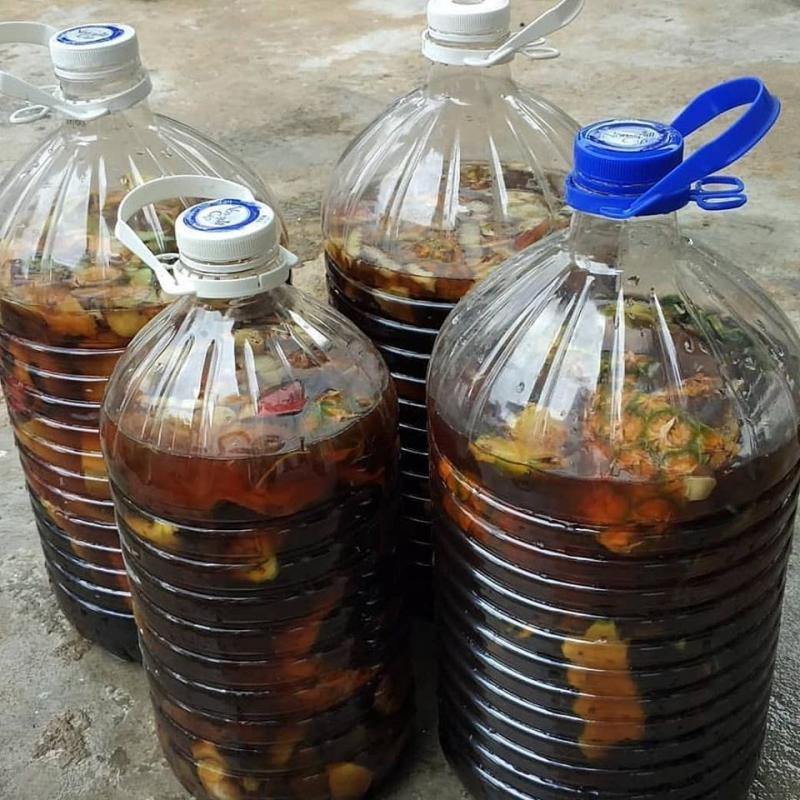
Eco-enzymes are the result of fermentation of organic kitchen waste
such as fruit and vegetable waste, sugar (brown sugar, brown sugar or cane sugar), and water. It
is dark brown in color and has a strong sweet-sour fermented aroma. The composition of the
waste, namely 54%, comes from organic waste.
Eco-enzyme products are environmentally
friendly products that are easy to use and easy to manufacture. Making eco-enzymes only requires
water, sugar as a carbon source, and vegetable and fruit organic waste. Utilization of
eco-enzymes can be done to reduce the amount of household waste, especially organic waste whose
composition is still high.
In its manufacture, eco-enzymes require containers in the form of
containers made of plastic, the use of materials made of glass is strictly avoided because it
can cause the container to break due to the activity of fermenting microbes. Eco enzyme does not
require large areas of land for the fermentation process such as composting and does not require
a composter tub with certain specifications.
The type of organic waste that is processed into eco enzyme is only leftover raw vegetables or fruit. Fermentation that produces alcohol and acetic acid which are disinfectants can only be applied to plant products because of the carbohydrate (sugar) content in them. The fermentation process will last 3 months. The first month, it will produce alcohol, then in the second month it will produce vinegar and in the third month it will produce enzymes. In the third month, our EE can be harvested.
Benefits of Eco Enzym for Agriculture
The following are some of the benefits of eco-enzyme fluids
1. As a Cleaning Liquid
2. Plant fertilizer
Eco-enzymes are useful for fertilizing soil and plants, eliminating pests, and improving the
quality and taste of the fruits and vegetables you grow. Application: mix 30 ml of Eco-enzyme in
2 liters of water. Put this mixture of water and Eco-enzyme solution into a spray bottle and
spray it on the soil around your plants or directly on your plants if your plants are
contaminated with pests.
3. Midges
Eco-Enzyme is very effective at repelling plant pests such as orchids and vegetables and even
pests or animals that bother around the house, such as cockroaches, ants, flies, mosquitoes and
other insects. Application: mix 15 ml of Eco Enzyme in 500 ml of water. Put this mixture of
water and Eco-enzyme solution into a spray bottle and spray it on the area you are targeting to
be pest free
4. Preserving the environment
Commercial cleaning solutions currently available often contain various types of chemical
compounds such as phosphates, nitrates, ammonia, chlorine and other compounds that have the
potential to pollute the air, soil, groundwater, rivers and seas. The use of Eco-enzyme as a
natural cleaning solution contributes to protecting our earth's environment.
How to Make Eco Enzymes
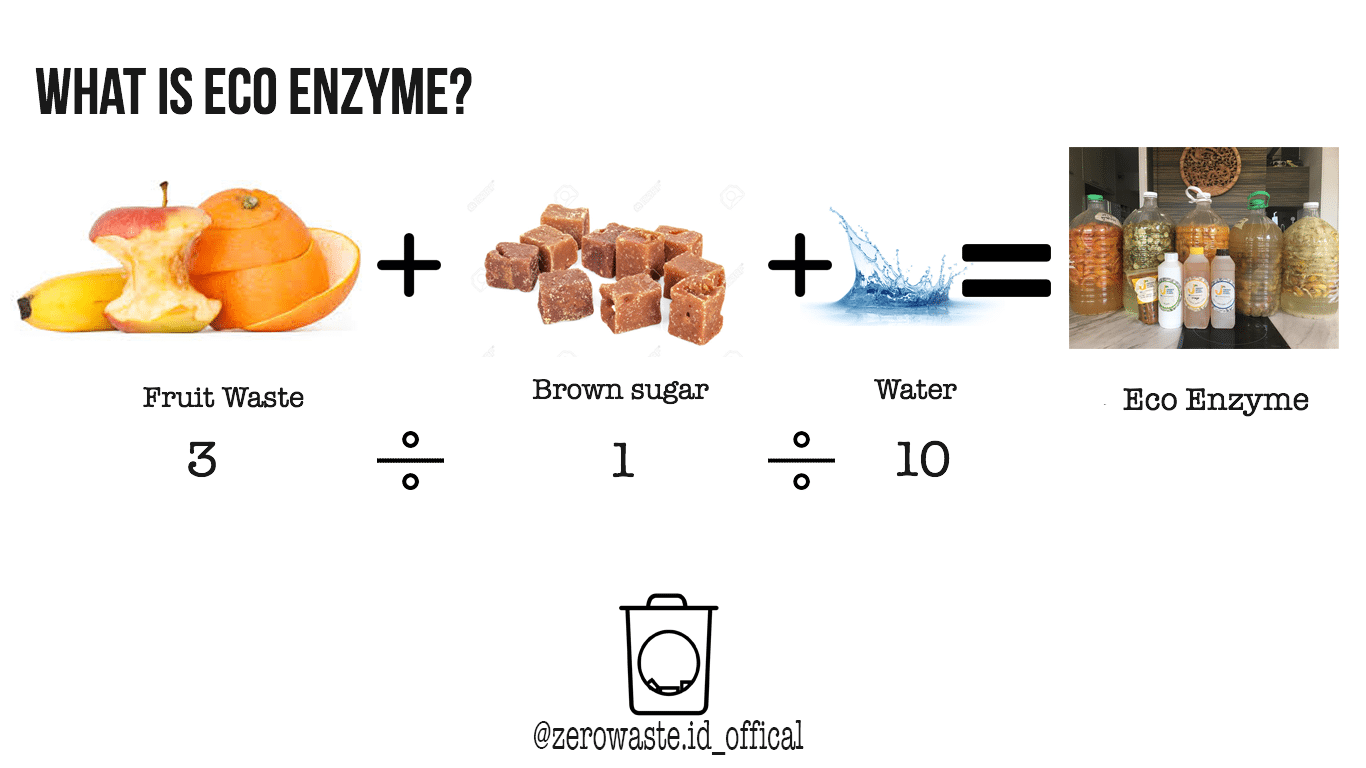
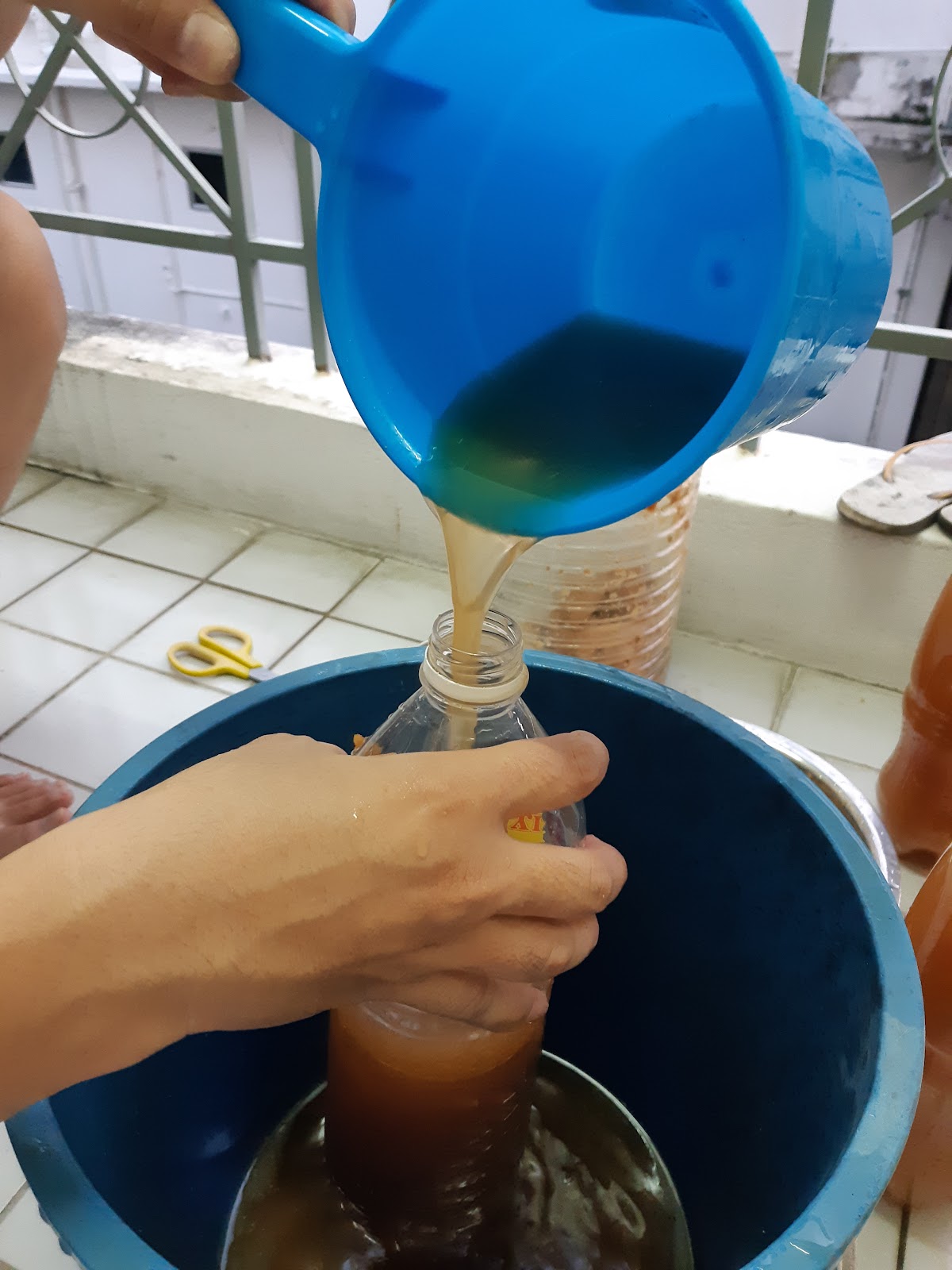
The way to make eco enzymes is by mixing 1 part of sugar/molasses, 3 parts of organic waste and 10 parts of clear water. The mixture was left for 3 months in an airtight plastic container. If the pH is below 4.0, it means that the eco enzyme is ready to be harvested. Before use, filtered first.
Eco-Enzyme Indicators React well:
1. The color is bright
according to the material we use. However, this color will be very different from one another.
Depends on the material we use. Even if the material used is the same, different microorganisms
will cause different colors.
2. The aroma is in accordance with the ingredients (no bad
smell)
3. There is a white mushroom. If the mushroom is black, it means failure, and we must
immediately recover it by adding sugar to the container according to the original measure.
4. Every day in the first month should be opened to remove gas. When opening the Eco-Enzyme
container, if there are ingredients that don't sink, we can stir them and press the ingredients
until they sink into the water.